
 |
| Test the Familiar Control |
A smart-home backup is only useful if someone knows it actually works.
It is easy to say, “We can always use the switch,” or “We can just do it by hand.” But those statements are often assumptions. A control may have moved. A switch may behave differently after an automation was added. A person who did not set up the system may not know which control matters.
The best time to find that out is while everything is working.
Choose one ordinary task
Do not test the whole house.
Pick one task the household uses often. It might be turning on a lamp, adjusting the thermostat, using a smart plug, opening a familiar lock, or running a routine that also has a simple manual alternative.
Choose something low-risk and ordinary.
The point is to make the home easier to understand, not to create a drill.
Use the familiar control
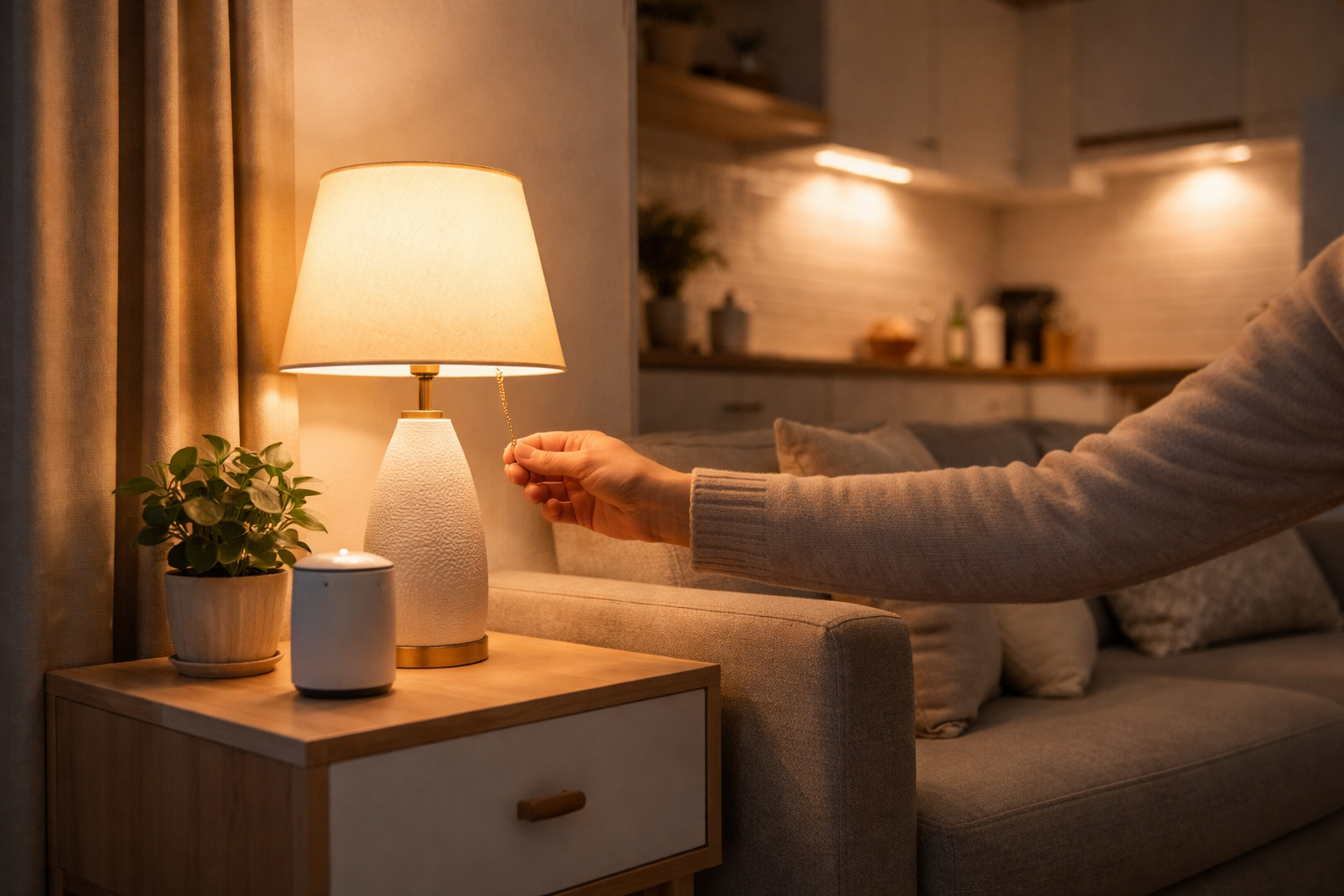
Use the wall switch, lamp switch, thermostat, button, pull chain, or other ordinary control you expect to work without the smart feature.
Ask one question: Could the person living here do this comfortably if the app or automation were unavailable?
If the answer is yes, you have verified something useful.
If the answer is no, you have found a small problem while there is time to fix it calmly.
Notice what the smart system changes
Some smart setups change how familiar controls behave.
A wall switch may have been left in one position because a smart bulb depends on constant power. A smart plug may make the lamp’s own switch less obvious. A routine may have become so convenient that nobody remembers the ordinary step.
That does not automatically mean the setup is wrong.
It means the household should understand the tradeoff.
A dependable system should not make an important everyday task mysterious.
Correct the note if the test proves it wrong
If your household note says “use the wall switch” but the switch does not do what you expected, update the note.
If the correct control is somewhere else, write that down.
If the manual path is awkward or confusing, decide whether the setup should be simplified.
The useful part of the test is not proving that everything is perfect. It is making the written instructions match the real home.
Keep the test short
You do not need to unplug the internet, disable accounts, or create a simulated outage.
Use the ordinary control once. Confirm what happens. Then return the home to its normal state.
A two-minute check is enough to replace “I think this works” with “We tested this.”
Make one fallback dependable before testing another
A reliable smart home grows from small things that are understood.
Choose one important task today. Use its ordinary control. Make sure the person who may need it knows what to do. Then stop.
You can test another part of the home later.
For a broader reliability review, use the Simple Smart Home Trust Checklist.
You may also find it useful to review Which Smart-Home Device Would You Notice First If It Stopped Working? and Why Backup Matters More Than Features in Smart Homes.

No comments:
Post a Comment